
Sizing
What Size Dumpster Do I Need? An Honest Local Guide
Two local things change the answer here: every house has a basement, and a surprising amount of your load is banned outright.
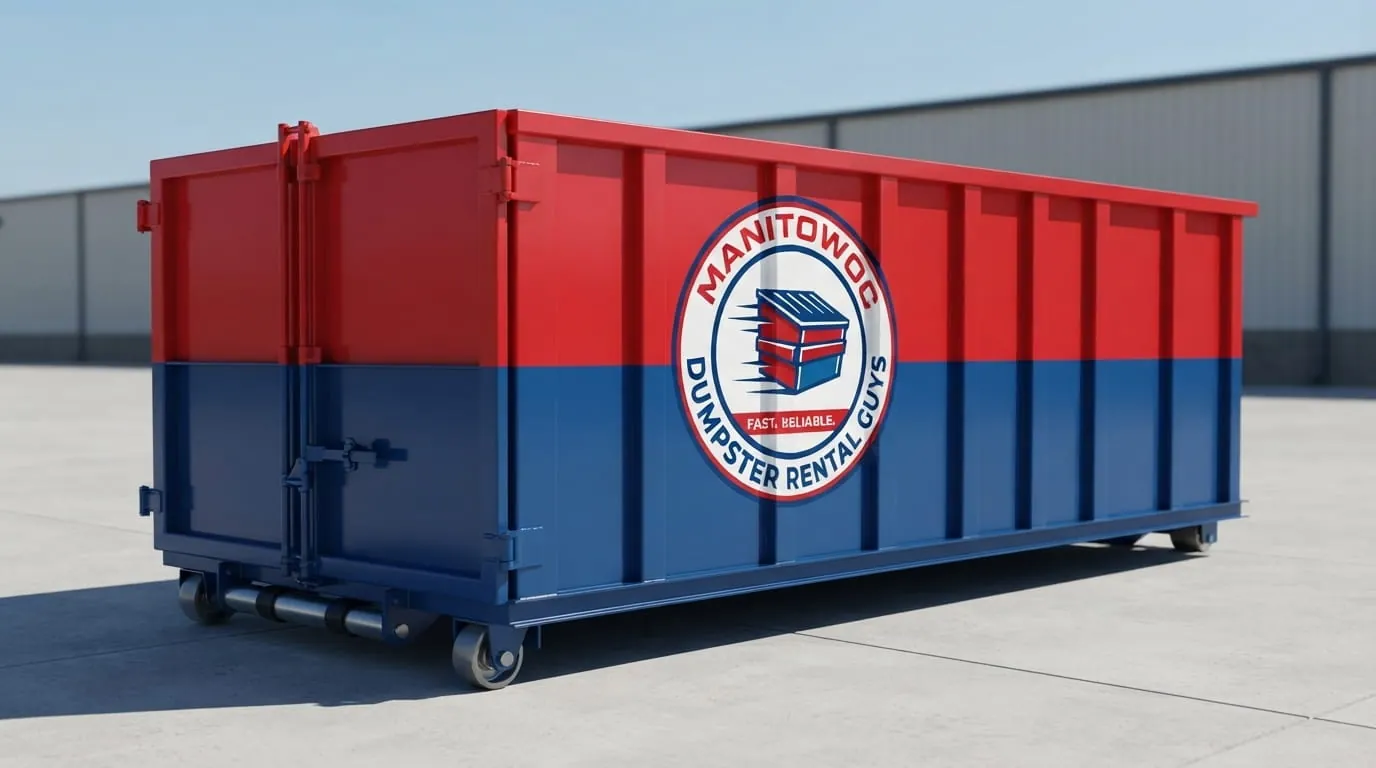
Start with the material
Hardly anyone can estimate their own debris in cubic yards, and a guide that asks you to is not much use. We ask three things: what are you throwing out, roughly how much in terms you can picture, and what the heavy items are.
Two local factors change the answer here more than anywhere else we work, and both are covered below.
Volume and weight, and which binds first
Every container has two limits and you will hit one first. Volume is obvious — you cannot load above the top rail. Weight is the one people forget and the one that costs money.
Each size includes a tonnage allowance: roughly one to two tons on a 10 yard, four to five on a 30. Past that you pay a per-ton overage, which we quote before you book.
⭐ What the bans take out of your load
This is the local factor most guides miss entirely, and it works in your favour.
Wisconsin bans a long list of materials from landfill, and several of them are bulky. Pulling them out does not just keep you legal — it meaningfully shrinks the container you need:
- Corrugated cardboard — banned, and it is the single bulkiest thing in most renovation loads. Flattened and taken to the county drop-off, it can take a whole size off the job.
- Paper, magazines, newsprint — banned. A cleared office or a decades-deep basement produces a startling volume.
- Cans, glass bottles, #1 and #2 plastic bottles — banned.
- Major appliances — banned, and each one is a meaningful chunk of a container.
- Electronics — banned.
- Tires — banned, and they do not compact.
- Yard waste and brush under six inches — banned.
The full list is here. Sort before you order, not after, and you will often order smaller.
What each size really holds
10 yard — 12 ft × 8 ft × 3.5 ft
Three to four pickup loads, one to two tons. The small-job container and the heavy material container: concrete, block, brick, tile, stone and soil. Low sides make loading heavy material far easier, and it fits the narrow driveways common near downtown.
15 yard — 16 ft × 8 ft × 4 ft
Five to six pickup loads, two to three tons. The most under-used size, and often the right one for this city's older housing — dense plaster-and-lath debris hits a 20's weight limit at half volume, and a 15 is short enough for a tight older lot.
20 yard — 22 ft × 8 ft × 4.5 ft
Seven to eight pickup loads, three to four tons. Our most common container and the default for a basement clear-out, a kitchen, or a roof.
30 yard — 22 ft × 8 ft × 6 ft
Ten to twelve pickup loads, four to five tons. Same footprint as the 20 with eighteen more inches of height, so it holds half again as much without needing more ground. Right for whole-house clearances, farm outbuildings and commercial work — but it needs room to tip, which rules it out on some older lots.
Worked examples from local jobs
| Job | Size | Why |
|---|---|---|
| Bathroom remodel | 10 yard | Small volume; tile and cast iron are dense |
| Concrete, stone or basement floor | 10 yard | About as heavy as material gets |
| One room, plaster and lath | 10–15 yard | Weight binds long before volume |
| Older downtown lot, any job | size down | Narrow drives and alleys limit access |
| Kitchen remodel | 15–20 yard | Cabinetry eats volume — pull the cardboard |
| Basement clear-out | 20 yard | Universal here, and always fuller than expected |
| Single-layer re-roof | 20 yard | Hits the weight allowance before it fills |
| Garage clear-out | 20 yard | Bulky and light — but pull oil, tires, batteries |
| Three-bed whole-house clearance | 30 yard | Contents fill volume before weight |
| Farm outbuilding clearance | 30 yard + swap | Pull metal, tires and chemicals first |
| New-build framing waste | 20–30 yard | Offcuts and packaging are light and voluminous |
| Commercial fit-out | 20 yard | Phased around trading hours |
| Deck or fence demolition | 20 yard | Cut the boards to length |
| Storm and tree debris | size down | Green wood is heavy; sort at six inches |
| Rental turnover | 20 yard | Furniture-led, so volume rather than weight |
Basements and older housing stock
Two things about Manitowoc housing change sizing.
Every house has a basement. Frost goes deep enough here that a foundation has to go below it, and once you have excavated that far you build the basement. So essentially every property has one, usually part-finished, usually full. It roughly doubles the stored contents of a house without one, and it adds a whole category of material — panelling, drop ceilings, carpet on concrete, built-in benches, old mechanical plant.
⚠️ Note that the old mechanical items are appliances and metal: furnaces, water heaters and softeners are banned from Wisconsin landfills, do not go in the container, and are worth money as scrap.
A large part of the city is pre-war. Near downtown the housing is older, denser and on narrower lots with alleys and detached garages. That matters twice: plaster and lath is several times the weight of drywall, and a 30 yard simply will not turn into some of those drives. Both push toward a smaller container with a swap.
More on basement and remodel work here.
⚠️ What cannot go in at all
- Cardboard, paper, cans, glass bottles, #1 and #2 plastics — banned by state law
- Appliances and electronics — banned
- Tires and lead-acid batteries — banned
- Waste oil and oil filters — banned
- Yard waste and brush under six inches — banned
- Liquids, paint, solvents and fuel — never
- Propane cylinders and sealed pressure vessels — never
- ⚠️ Asbestos — never, in any quantity
How to describe your job on the phone
- What the material is. "Kitchen cabinets, countertop, appliances and the tile behind them."
- Roughly when the house was built. Pre-war changes the weight; pre-1980 means testing.
- Whether there is plaster and lath rather than drywall.
- Whether a basement is involved, and whether the contents are going too.
- ⭐ How much cardboard and packaging — it is banned and it is bulky.
- Driveway width, and whether there is an alley or a detached garage.
- Any concrete, stone or soil — those get their own container.
- Which town — five counties, and the facilities differ outside Manitowoc County.
Need a container in Manitowoc?
Call and describe the job. Three minutes on the phone gets you a size recommendation, a flat rate and a delivery window — and we will tell you if a smaller, cheaper container is the right answer.
Call (920) 717-3199